10 High-Paying AI Skills for Indian Developers in 2026
Master these 10 AI skills to earn 30-50% more. Complete guide with salary data, free learning resources, and a practical roadmap for Indian developers.
Note: Salary premiums, demand growth rates, and compensation figures in this article reflect data available as of Q1 2026. Verify for latest figures.
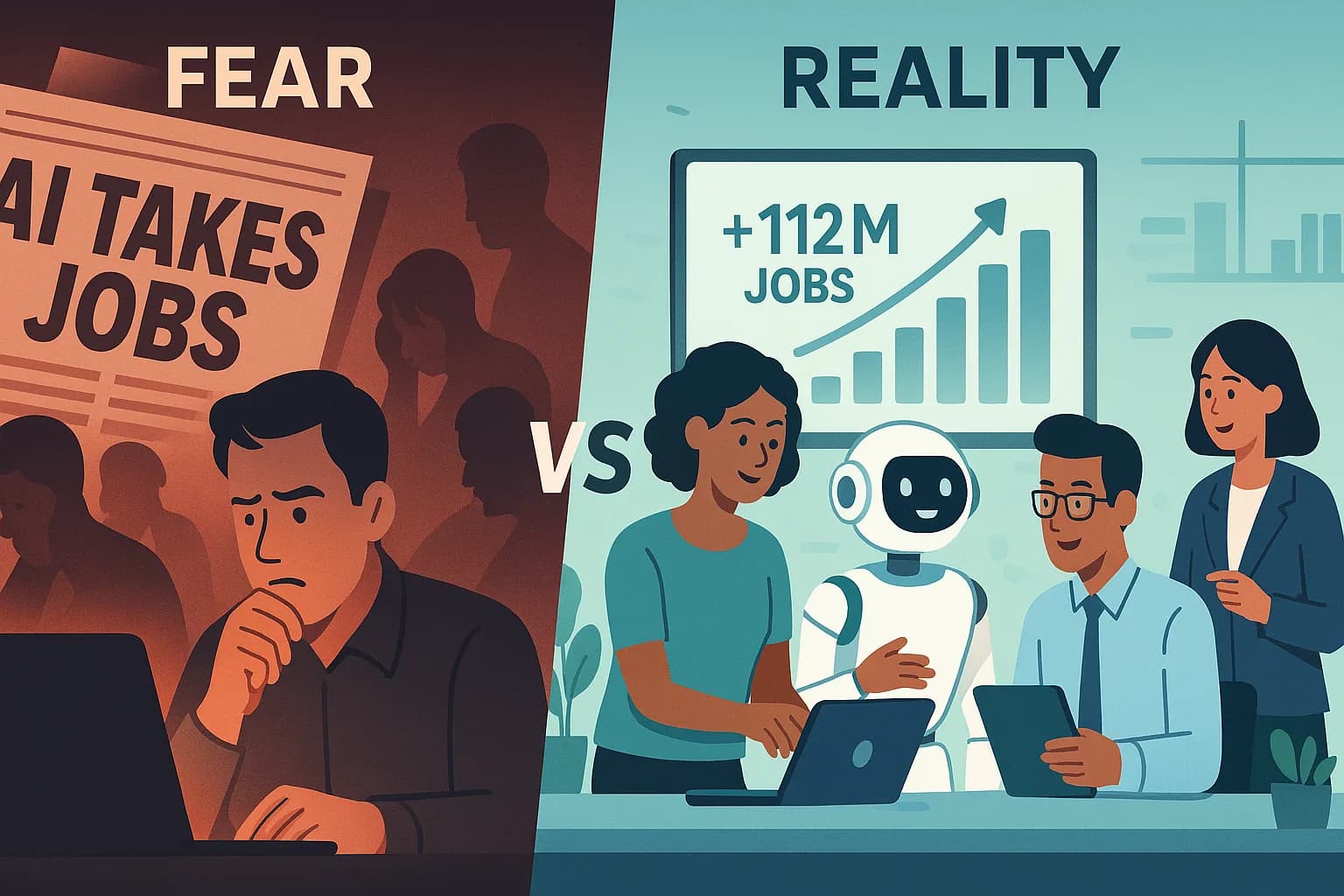
The AI salary premium is real, and it's massive. Indian developers with specialized AI skills are commanding 30-50% higher salaries than their peers with traditional skill sets. But here's what most people get wrong: waiting for your company's training program to catch up is a losing strategy.
The AI Skills Premium: Why This Matters Now
Let's start with hard numbers. According to hiring data from Naukri, LinkedIn, and Glassdoor as of Q1 2026:
| Role Type | Average CTC (India) | With AI Skills | Premium |
|---|---|---|---|
| Software Engineer | Rs. 12-18 LPA | Rs. 18-28 LPA | +50% |
| Senior Developer | Rs. 20-30 LPA | Rs. 35-50 LPA | +60% |
| Tech Lead | Rs. 35-45 LPA | Rs. 55-80 LPA | +65% |
Why Waiting for Company Training Is a Losing Strategy
Here's the uncomfortable truth: corporate training programs are reactive. They're designed around last year's requirements, approved by committees, and rolled out at enterprise speed. By the time your company offers "GenAI Fundamentals," the market has moved to AI agents and multimodal systems.
The companies leading in AI—Anthropic, OpenAI, Google DeepMind—are releasing new capabilities monthly. Corporate training can't keep pace.
More importantly, your career belongs to you, not your employer. Every month you wait for someone else to train you is a month your market value stagnates while self-learners pull ahead.
The India-Specific Opportunity
India is uniquely positioned for the AI talent arbitrage:
- Global companies are hiring remote AI talent at rates that are exceptional by Indian standards but competitive globally
- Time zone overlap with both US (evening calls) and Europe (morning calls) makes Indian developers valuable for distributed teams
- English proficiency combined with technical depth creates a talent pool that's hard to match
- GCCs are scaling AI teams in Bangalore, Hyderabad, and Pune at unprecedented rates
The opportunity window is 2-3 years. As more developers upskill, the premium will compress. First movers capture the highest returns.
What This Guide Covers
I've analyzed job postings, salary surveys, and hiring trends to identify the 10 AI skills that command the highest premiums in 2026. For each skill, you'll get:
- What it is and why it matters
- Realistic salary ranges (India and global remote)
- Difficulty level and time investment
- Free resources—no paid courses required
- A quick-win project to demonstrate competency
Let's dive in.
The 10 High-Paying AI Skills for 2026
1. Prompt Engineering and AI Orchestration
What it is: The art and science of designing effective prompts, system instructions, and multi-step AI workflows. It's evolved far beyond "write a better prompt"—modern prompt engineering involves chain-of-thought reasoning, few-shot learning, structured outputs, and orchestrating multiple AI calls.
Why it's valuable in 2026: Every application now has an AI component, and the quality of that component depends on prompt design. Companies are discovering that the difference between a mediocre AI feature and a great one often comes down to prompt architecture, not model selection.
| Metric | Value |
|---|---|
| India Salary | Rs. 15-35 LPA |
| Global Remote | $60,000-120,000 |
| Difficulty | Beginner to Intermediate |
| Time to Learn | 4-8 weeks |
- Anthropic's Prompt Engineering Guide (docs.anthropic.com)
- OpenAI Cookbook (github.com/openai/openai-cookbook)
- DeepLearning.AI ChatGPT Prompt Engineering (free on Coursera)
- Free Practice Platforms
Quick Win Project: Build a "Prompt Library" for a specific use case—customer support, code review, or content generation. Document what works, what doesn't, and why. Share it on GitHub with benchmarks.
2. AI Agent Building
What it is: Creating autonomous AI systems that can plan, execute multi-step tasks, use tools, and adapt based on results. Unlike simple chatbots, agents can browse the web, write and execute code, manage files, and interact with APIs—all with minimal human intervention.
Why it's valuable in 2026: We've entered the "Year of Agents." Every major AI lab is pushing agentic capabilities, and enterprises are deploying agents for customer service, code generation, data analysis, and workflow automation. The demand for developers who can build reliable, safe agents is exploding.
| Metric | Value |
|---|---|
| India Salary | Rs. 25-50 LPA |
| Global Remote | $80,000-150,000 |
| Difficulty | Intermediate |
| Time to Learn | 8-12 weeks |
- LangChain Documentation and Tutorials (python.langchain.com)
- CrewAI (github.com/joaomdmoura/crewAI)
- AutoGPT and BabyAGI (GitHub)
- Anthropic's Claude Tool Use Guide
Quick Win Project: Build a "Research Agent" that takes a topic, searches the web, summarizes findings, and produces a structured report. Deploy it as a simple web app using Streamlit (free tier).
3. RAG (Retrieval-Augmented Generation) Systems
What it is: RAG combines the power of large language models with your own data. Instead of relying solely on what the model learned during training, RAG retrieves relevant documents from your knowledge base and provides them as context for more accurate, up-to-date, and hallucination-resistant responses.
Why it's valuable in 2026: Every enterprise wants to build AI that knows their specific data—internal documents, product catalogs, customer history. RAG is the dominant pattern for achieving this without expensive fine-tuning. It's become table stakes for enterprise AI development.
| Metric | Value |
|---|---|
| India Salary | Rs. 22-45 LPA |
| Global Remote | $75,000-140,000 |
| Difficulty | Intermediate |
| Time to Learn | 6-10 weeks |
- LlamaIndex Documentation (docs.llamaindex.ai)
- Pinecone Learning Center (pinecone.io/learn)
- LangChain RAG Tutorials
- "Building RAG Applications" by LlamaIndex (YouTube)
Quick Win Project: Build a "Chat with PDF" application. Upload a document, create embeddings, store in a vector database, and enable conversational Q&A. This single project demonstrates chunking, embedding, retrieval, and generation—the complete RAG pipeline.
4. Fine-Tuning and Model Customization
What it is: Adapting pre-trained AI models to your specific use case by training on custom datasets. Modern techniques like LoRA (Low-Rank Adaptation) and QLoRA make fine-tuning accessible without massive compute budgets.
Why it's valuable in 2026: While RAG handles many use cases, some require the model to fundamentally understand domain-specific patterns, terminology, or output formats. Fine-tuning creates models that excel at narrow tasks—code generation in specific frameworks, medical terminology, legal document analysis.
| Metric | Value |
|---|---|
| India Salary | Rs. 30-60 LPA |
| Global Remote | $90,000-160,000 |
| Difficulty | Advanced |
| Time to Learn | 12-16 weeks |
- Hugging Face Course (huggingface.co/learn)
- LoRA and QLoRA Papers + Tutorials
- Google Colab Notebooks
- Axolotl (github.com/axolotl-ai-cloud/axolotl)
Quick Win Project: Fine-tune a small model (Llama 3 8B or Mistral 7B) on a specific task—code comments in your preferred language, customer support responses in your domain, or structured data extraction. Document the process, share the adapter weights on Hugging Face.
5. Multimodal AI Development
What it is: Building AI systems that can understand and generate across multiple modalities—text, images, audio, video, and code. This includes vision-language models, text-to-image systems, and audio processing.
Why it's valuable in 2026: The latest frontier models (GPT-6 Astra, Claude Opus 5.5 and Fable 5.1, Gemini 3.8) are inherently multimodal. Applications increasingly need to process screenshots, analyze documents with images, generate visual content, or handle voice interactions. Developers who can build across modalities command premium rates.
| Metric | Value |
|---|---|
| India Salary | Rs. 28-55 LPA |
| Global Remote | $85,000-155,000 |
| Difficulty | Intermediate to Advanced |
| Time to Learn | 10-14 weeks |
- Google's Gemini Multimodal Guides (ai.google.dev)
- OpenAI Vision API Documentation
- Hugging Face Transformers (Vision Models)
- Whisper (OpenAI's speech recognition)
Quick Win Project: Build a "Document Intelligence" system that takes images of documents (receipts, invoices, forms), extracts structured data, and enables Q&A. Combine vision models with text generation for a complete multimodal pipeline.
6. AI-Assisted Coding and Tool Mastery
What it is: Maximizing productivity with AI coding assistants—Cursor, GitHub Copilot, Claude Code, and similar tools. This goes beyond basic autocomplete to include AI-driven refactoring, debugging, code review, and architecture planning.
Why it's valuable in 2026: Companies report 40-60% productivity gains from developers skilled in AI-assisted coding. It's not about the tool doing your job—it's about you doing 2x more with the same effort. Developers who master these tools deliver faster, with fewer bugs.
| Metric | Value |
|---|---|
| India Salary | Rs. 18-40 LPA |
| Global Remote | $70,000-130,000 |
| Difficulty | Beginner |
| Time to Learn | 2-4 weeks |
- Cursor (cursor.com)
- GitHub Copilot (Free for students, educators, open-source maintainers)
- Claude.ai (Free tier)
- AI Coding Workflow Videos (YouTube)
Quick Win Project: Complete a side project using AI-assisted coding end-to-end. Document your prompts, the AI's suggestions, what you accepted/rejected, and your productivity metrics. Write a blog post or Twitter thread about your learnings.
7. LLMOps and AI Infrastructure
What it is: The operational discipline of deploying, monitoring, and maintaining AI systems in production. This includes model serving, prompt versioning, A/B testing, cost optimization, latency management, and observability.
Why it's valuable in 2026: Every company experimenting with AI needs to move to production. The gap between "demo works" and "production ready" is massive. LLMOps engineers ensure AI systems are reliable, cost-effective, and maintainable at scale.
| Metric | Value |
|---|---|
| India Salary | Rs. 25-50 LPA |
| Global Remote | $80,000-150,000 |
| Difficulty | Intermediate to Advanced |
| Time to Learn | 10-14 weeks |
- MLflow (mlflow.org)
- LangSmith (Free tier from LangChain)
- Weights & Biases (Free tier)
- "Full Stack LLM Bootcamp" (fullstackdeeplearning.com)
Quick Win Project: Take any AI application and add production-grade infrastructure—logging, monitoring, cost tracking, and automated evaluation. Deploy to a cloud provider (all have free tiers) and document your architecture decisions.
8. AI Safety and Evaluation
What it is: Ensuring AI systems behave reliably, safely, and as intended. This includes red teaming (adversarial testing), building evaluation frameworks, implementing guardrails, and measuring model performance on safety benchmarks.
Why it's valuable in 2026: As AI systems handle more critical tasks, safety becomes non-negotiable. Enterprises deploying AI for healthcare, finance, or customer-facing applications need specialists who can evaluate risks, implement safeguards, and ensure compliance.
| Metric | Value |
|---|---|
| India Salary | Rs. 28-55 LPA |
| Global Remote | $85,000-160,000 |
| Difficulty | Intermediate to Advanced |
| Time to Learn | 8-12 weeks |
- Anthropic's Research on AI Safety (anthropic.com/research)
- LMSYS Chatbot Arena (lmsys.org)
- Garak (github.com/leondz/garak)
- OWASP LLM Top 10 (owasp.org)
Quick Win Project: Red team an open-source LLM application. Document vulnerabilities found, propose mitigations, and implement guardrails. Write up your findings as a security report.
9. Vector Databases and Embeddings
What it is: The infrastructure layer for semantic search and RAG systems. Vector databases store high-dimensional embeddings that represent meaning, enabling similarity search at scale. Understanding embeddings, indexing strategies, and query optimization is essential.
Why it's valuable in 2026: Every RAG system, recommendation engine, and semantic search feature depends on vector databases. As these systems scale to billions of documents, specialists who can optimize performance, reduce costs, and ensure reliability are highly valued.
| Metric | Value |
|---|---|
| India Salary | Rs. 20-45 LPA |
| Global Remote | $70,000-140,000 |
| Difficulty | Intermediate |
| Time to Learn | 6-10 weeks |
- Pinecone (pinecone.io)
- Weaviate (weaviate.io)
- Chroma (trychroma.com)
- "Vector Databases: From Embeddings to Applications" (DeepLearning.AI)
Quick Win Project: Build a semantic search engine for a dataset of your choice—job postings, research papers, or product catalogs. Benchmark different embedding models and vector databases. Document your findings on query performance, accuracy, and cost.
10. AI Product Management
What it is: The intersection of product thinking and AI capabilities. AI PMs define what AI products should do, translate technical possibilities into user value, manage stakeholder expectations, and ensure AI features solve real problems.
Why it's valuable in 2026: The AI gold rush has created a shortage of people who can bridge technical teams and business stakeholders. Engineers who understand product thinking, or PMs who understand AI deeply, command significant premiums.
| Metric | Value |
|---|---|
| India Salary | Rs. 30-70 LPA |
| Global Remote | $100,000-180,000 |
| Difficulty | Intermediate |
| Time to Learn | 8-12 weeks |
- Reforge AI Product Management (Free articles)
- Lenny's Newsletter (lennysnewsletter.com)
- "AI Product Manager Handbook" (ProductSchool - free PDF)
- Anthropic's Claude Product Blog
Quick Win Project: Write a Product Requirements Document (PRD) for an AI feature in an existing product. Include user research (even informal), technical constraints, success metrics, and a roadmap. Share it publicly to demonstrate product thinking.
The Complete Salary Comparison Table
| Skill | India (Rs. LPA) | Global Remote ($K/year) | Demand Growth (2025-2026, as of Q1 2026) |
|---|---|---|---|
| Prompt Engineering | 15-35 | 60-120 | +85% |
| AI Agent Building | 25-50 | 80-150 | +120% |
| RAG Systems | 22-45 | 75-140 | +95% |
| Fine-Tuning | 30-60 | 90-160 | +70% |
| Multimodal AI | 28-55 | 85-155 | +90% |
| AI-Assisted Coding | 18-40 | 70-130 | +150% |
| LLMOps | 25-50 | 80-150 | +110% |
| AI Safety | 28-55 | 85-160 | +130% |
| Vector Databases | 20-45 | 70-140 | +100% |
| AI Product Management | 30-70 | 100-180 | +75% |
The Learning Path: From Zero to Hired
Month 1-2: Foundation
Focus Skills: Prompt Engineering (1) and AI-Assisted Coding (6)
Why start here: These skills have the fastest ROI. You can apply them immediately to your current work, and they require no ML background. They also provide the foundation for understanding what AI can and cannot do.
Weekly commitment: 10-15 hours
Milestones:
- Week 1-2: Complete Anthropic's prompt guide, practice daily
- Week 3-4: Master Cursor or Copilot for your primary language
- Week 5-6: Build and share your prompt library
- Week 7-8: Complete a project using AI-assisted coding, document productivity gains
Month 3-4: Building
Focus Skills: AI Agent Building (2), RAG Systems (3), Vector Databases (9)
Why these next: These skills are interconnected—agents use RAG, RAG needs vector databases. Learning them together creates a complete mental model for building AI applications.
Weekly commitment: 12-18 hours
Milestones:
- Week 1-3: Complete LlamaIndex RAG tutorials, build Chat with PDF
- Week 4-6: Learn LangChain agents, build a research agent
- Week 7-8: Deep dive into vector database optimization, benchmark different options
Month 5-6: Advanced
Focus Skills: Fine-Tuning (4), Multimodal AI (5), LLMOps (7)
Why these: These skills require more technical depth and distinguish senior AI engineers from juniors. They're also where the highest salaries concentrate.
Weekly commitment: 15-20 hours
Milestones:
- Week 1-4: Complete Hugging Face course, fine-tune a model using LoRA
- Week 5-8: Build a multimodal application, deploy with proper LLMOps infrastructure
- Document everything—this becomes your portfolio
Ongoing: Specialization
Focus Skills: AI Safety (8), AI Product Management (10)
Why ongoing: These skills develop over time through practice and exposure. They differentiate you for leadership roles and ensure your AI work is responsible and impactful.
Weekly commitment: 5-10 hours (alongside main work)
Approach:
- Read AI safety research monthly
- Practice writing PRDs for AI features
- Participate in red teaming exercises
- Build relationships with AI PMs to learn their perspective
Why Free Resources Beat Company Training
Company Training Is Reactive and Slow
The typical corporate learning path:
- New technology emerges (Month 0)
- Early adopters experiment (Month 3-6)
- Proven use cases emerge (Month 12)
- L&D identifies training need (Month 15)
- Vendor selection and procurement (Month 18)
- Training rollout (Month 24)
Result: By the time you get company training, the cutting edge has moved 2 years ahead.
Free Resources Are Cutting-Edge
The best AI learning materials come directly from the source:
- Anthropic publishes their research and prompt guides
- OpenAI shares their cookbook and tutorials
- Hugging Face provides the industry-standard NLP course
- Google releases Gemini guides alongside new models
These aren't second-hand interpretations—they're primary sources from the people building the technology.
Self-Paced Means Faster
Corporate training assumes average pace. If you're motivated and capable, you can complete a typical 6-month corporate curriculum in 6 weeks of focused self-study.
More importantly, you can skip what you know and deep dive where you need to. Corporate training makes everyone sit through "Introduction to Python" regardless of experience.
Portfolio Beats Certificates
When hiring AI engineers, I care about one thing: can you build?
- A certificate says you completed a course
- A portfolio shows you shipped real projects
Every free resource in this guide produces artifacts—GitHub repos, deployed applications, blog posts, contributions. These artifacts are what get you hired, not completion badges.
The formula: Free resources + applied projects + public documentation = career transformation.
Conclusion: Your 90-Day Challenge
You've just read about 10 skills that can increase your salary by 30-50%. You have links to free resources that cost nothing but time. The only question is: will you act?
Start With Two or Three
Don't try to learn everything simultaneously. Pick based on your current role and goals:
- If you're a developer: Start with Prompt Engineering and AI-Assisted Coding
- If you're backend-focused: Start with RAG Systems and Vector Databases
- If you want to lead: Add AI Safety and AI Product Management
- If you want maximum salary: Prioritize AI Agent Building and LLMOps
The 90-Day Challenge
Commit to 10 hours per week for 90 days. That's 130 hours—enough to achieve real proficiency in 2-3 skills and build a portfolio that demonstrates your capabilities.
Week 1: Pick your skills, gather resources, create a learning schedule
Week 2-8: Execute the plan, build projects, document everything
Week 9-12: Share your work, update your resume, start applying
The Compound Effect
Here's what happens when you start:
- Month 1: You understand AI better than 80% of developers
- Month 3: You've built projects that demonstrate real skills
- Month 6: You're getting recruiter messages for AI roles
- Month 12: You've transitioned to AI-focused work at premium compensation
The developers who started learning AI seriously 18 months ago are now leading AI teams at top companies. The opportunity is still here, but the window is narrowing.
Your Next Step
Close this article and do one thing:
- Pick one free resource from this guide
- Open it in a new tab
- Spend 30 minutes learning
That's it. Not a grand plan, not a 6-month commitment—just 30 minutes of action today. The journey of a thousand miles begins with a single step, and your journey to an AI career begins with a single tutorial.
The AI skills premium is real. The resources are free. The only variable is you.
Start today.
Resources Quick Reference:
| Skill | Primary Free Resource |
|---|---|
| Prompt Engineering | docs.anthropic.com |
| AI Agent Building | python.langchain.com |
| RAG Systems | docs.llamaindex.ai |
| Fine-Tuning | huggingface.co/learn |
| Multimodal AI | ai.google.dev |
| AI-Assisted Coding | cursor.com |
| LLMOps | mlflow.org |
| AI Safety | anthropic.com/research |
| Vector Databases | pinecone.io/learn |
| AI Product Management | lennysnewsletter.com |
Related Reading:
Enjoying this article?
Get posts like this in your inbox. No spam, unsubscribe anytime.