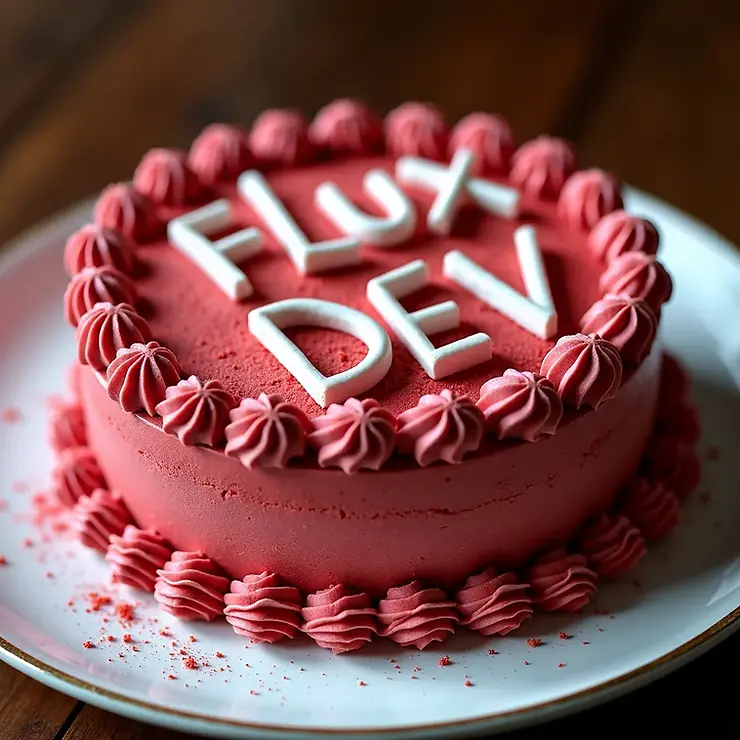
FLUX Models Comparison: From FLUX.1 to FLUX.2 (2026 Complete Guide)
Complete guide to all FLUX AI image generation models — FLUX.1 Pro, Dev, Schnell, FLUX.1.1 Pro, and the full FLUX.2 lineup including [max], [pro], [flex], Dev and Schnell. Pricing, benchmarks, hardware requirements.
In the rapidly evolving landscape of AI-generated imagery, FLUX by Black Forest Labs has established itself as a leading force. Since the original FLUX.1 launch, the lineup has grown across two full generations — each with distinct variants optimized for different use cases, budgets, and hardware.
This updated guide covers every model from FLUX.1 through the complete FLUX.2 family released in late 2025, helping you pick the right one for your workflow.
The FLUX Family at a Glance
Black Forest Labs has shipped three distinct generations:
- FLUX.1 (August 2024) — The original three-model lineup: Pro, Dev, Schnell
- FLUX.1.1 Pro (October 2024) — A speed-optimized Pro upgrade, 6x faster with improved quality
- FLUX.2 (November 2025) — A complete redesign at 32B parameters with six new variants
FLUX.1.1 Pro — The Bridge Model
Before FLUX.2 arrived, Black Forest Labs shipped FLUX.1.1 Pro as a significant upgrade to the original Pro. It delivered 6x faster generation than FLUX.1 Pro while improving image quality, making it the go-to API choice for production pipelines throughout most of 2025.
- Speed: ~4.5 seconds per image
- Resolution: Up to 2MP
- License: Commercial API only
- Pricing: ~$0.04/image
FLUX.1.1 Pro remains a valid choice in 2026 for budget-conscious production workflows where FLUX.2's multi-reference features aren't needed.
FLUX.2 — The 2025 Redesign
Released in November 2025, FLUX.2 is a complete architectural overhaul built on a 32-billion parameter foundation — nearly 3x the scale of FLUX.1's 12B. It unifies image generation and editing in a single model and introduces multi-reference composition for the first time in the FLUX family.
Core FLUX.2 Capabilities
- Multi-Reference Composition — blend up to 10 source images into a single novel output
- 4 Megapixel Output — edit and generate at up to 4096×4096px
- Superior Typography — handles complex text, infographics, and UI mockups with legible fine text
- Unified Architecture — generation and editing share a single checkpoint
- Vision-Language Integration — coupled with Mistral vision-language model for better prompt understanding
- LoRA Fine-tuning — full LoRA support on the open-weight Dev variant
FLUX.2 Variants Explained
Black Forest Labs uses two naming conventions for FLUX.2 — bracketed variants ([pro], [max], [flex]) indicate API tiers, while unbracketed names (Dev, Schnell) are the open-weight releases.
#### FLUX.2 [max] — The Flagship
The highest-quality variant in the entire FLUX family. FLUX.2 [max] offers:
- Full parameter control and advanced style editing
- Up to 4MP resolution output
- Best-in-class prompt adherence and anatomical accuracy
- Ideal for commercial final delivery and precision creative work
- Pricing: ~$0.08/image
- Speed: 3–5 seconds
Best for: Final production renders, commercial photography replacement, high-end client deliverables.
#### FLUX.2 [pro] — Enterprise-Grade
Slightly faster than [max] with multi-reference support for up to 8 images. Available on Azure AI Foundry for enterprise SLA deployments.
- Up to 4096px (~1MP in public preview, 4MP in enterprise tier)
- Complex prompt handling with near-perfect text rendering
- Enterprise-ready with Azure deployment support
- Pricing: ~$0.06/image
- Speed: ~4 seconds
Best for: Infographics, UI mockups, enterprise pipelines, brand-consistent multi-scene generation.
#### FLUX.2 [flex] — The Balanced Choice
Sits between [max] and [pro] in the quality-speed tradeoff. FLUX.2 [flex] adjusts parameters dynamically to match workflow needs — crank up quality for finals, speed up for drafts with the same API endpoint.
- Configurable quality vs. speed dial
- Fits most professional workflows without hitting [max] pricing
- Pricing: ~$0.05/image
- Speed: 2–4 seconds (configurable)
Best for: Most professional day-to-day creative work — the default choice for agencies.
#### FLUX.2 Dev — Open Weights
The open-weight version of FLUX.2. Released under a research license on Hugging Face, it supports full LoRA fine-tuning and custom workflow integration.
- 32B parameters, runs via ComfyUI and Diffusers
- WebP output support for web-optimized pipelines
- Prompt expansion mode for short prompts
- Full LoRA ecosystem for character/style consistency
- VRAM: 12–24GB (FP8 quantized); 54GB+ at full precision
- Cost: Free (open weights)
Best for: Developers building custom pipelines, researchers, self-hosted setups with an RTX 4090 or better.
#### FLUX.2 Schnell — Speed-First
Ultra-fast distilled variant optimized for rapid iteration. Generation in 2–3 seconds with a slight quality reduction compared to [flex] or [max].
- Ideal for preview loops and real-time creative exploration
- Lower API costs for high-volume workflows
- Pricing: ~$0.02/image
- Speed: 2–3 seconds
Best for: Quick previews, A/B prompt testing, high-volume automated pipelines where cost per image matters.
FLUX.1 Models — Still Relevant
While FLUX.2 dominates in 2026, the original FLUX.1 models remain excellent options — especially for users with hardware constraints or Apache 2.0 licensing requirements.
FLUX.1 Pro
The original flagship, now largely succeeded by FLUX.1.1 Pro and FLUX.2. Still available via API with commercial licensing. Strong prompt following and visual quality for standard text-to-image tasks at the most affordable Pro pricing.
FLUX.1 Dev
Open-weight 12B model for research and non-commercial use. Runs on ~24GB VRAM. Still widely supported in ComfyUI and Automatic1111 ecosystems with thousands of community LoRAs available.
FLUX.1 Schnell
The Apache 2.0 licensed speed model. Fully open for any commercial or personal use. Runs on 12GB VRAM, fastest local generation available. The best option if licensing freedom is the top priority.
Full Comparison Table
| Model | Params | Quality | Multi-Ref | Max Res | Speed | License | Cost |
|---|---|---|---|---|---|---|---|
| FLUX.2 [max] | 32B | ⭐⭐⭐⭐⭐ | 10 images | 4MP | 3–5s | Commercial API | ~$0.08 |
| FLUX.2 [pro] | 32B | ⭐⭐⭐⭐⭐ | 8 images | 4MP | ~4s | Commercial API / Azure | ~$0.06 |
| FLUX.2 [flex] | 32B | ⭐⭐⭐⭐½ | Yes | 4MP | 2–4s | Commercial API | ~$0.05 |
| FLUX.2 Dev | 32B | ⭐⭐⭐⭐½ | Yes | 4MP | Variable | Research/Open | Free |
| FLUX.2 Schnell | 32B | ⭐⭐⭐⭐ | Yes | 4MP | 2–3s | Commercial API | ~$0.02 |
| FLUX.1.1 Pro | 12B | ⭐⭐⭐⭐ | No | 2MP | ~4.5s | Commercial API | ~$0.04 |
| FLUX.1 Pro | 12B | ⭐⭐⭐⭐ | No | 2MP | Slower | Commercial API | ~$0.04 |
| FLUX.1 Dev | 12B | ⭐⭐⭐½ | No | 2MP | Medium | Non-commercial | Free |
| FLUX.1 Schnell | 12B | ⭐⭐⭐ | No | 2MP | Fastest | Apache 2.0 | Free |
Benchmark: FLUX.2 vs The Competition
FLUX.2 [Dev] in open-weight head-to-head comparisons:
| Competitor | FLUX.2 Win Rate |
|---|---|
| Qwen-Image | 66.6% (text-to-image) |
| Hunyuan Image 3.0 | 59.8% (single-reference editing) |
| DALL-E 3 | Win (typography & multi-reference) |
| Midjourney v7 | Competitive (stylized art: MJ wins) |
Which Model Should You Choose?
For Professional Production Work
→ FLUX.2 [flex] or FLUX.2 [max] depending on budgetFor Enterprise / Multi-Scene Brand Work
→ FLUX.2 [pro] on Azure for SLA guarantees and multi-reference brand consistencyFor High-Volume Automated Pipelines
→ FLUX.2 Schnell at ~$0.02/image keeps costs manageableFor Custom Self-Hosted Pipelines (Developer)
→ FLUX.2 Dev with LoRA — best open-weight option in 2026 with RTX 4090 (FP8 quantized)For Apache 2.0 Licensing Freedom (Any Use)
→ FLUX.1 Schnell — still the only fully open model in the familyFor Budget API Work Without Multi-Reference
→ FLUX.1.1 Pro or FLUX.1 Pro — proven quality at lower costHardware Reality for Self-Hosting FLUX.2 Dev
FLUX.2's 32B parameters are demanding. Here's what to expect locally:
| Setup | VRAM | Performance |
|---|---|---|
| Full FP32 | 90GB+ | Unrealistic for most |
| FP8 Quantized | ~54GB | A100/H100 territory |
| GGUF Q4 (community) | ~24GB | RTX 3090/4090, slower |
| GGUF Q2 (community) | ~16GB | Quality trade-off noticeable |
Conclusion
Black Forest Labs has built the most comprehensive open AI image generation family available. FLUX.2 is the clear choice for new projects requiring multi-reference, high-resolution editing, or maximum quality. For quick local iterations with licensing freedom, FLUX.1 Schnell (Apache 2.0) remains unbeatable.
The practical default for most creative professionals in 2026: start with FLUX.2 [flex] via API and upgrade to [max] only for final production renders. Keep FLUX.2 Dev in your local ComfyUI setup for custom LoRA experimentation.
Sources: Black Forest Labs · Microsoft Foundry Dec 2025 Update · Hugging Face · AI Films Studio Guide
Enjoying this article?
Get posts like this in your inbox. No spam, unsubscribe anytime.