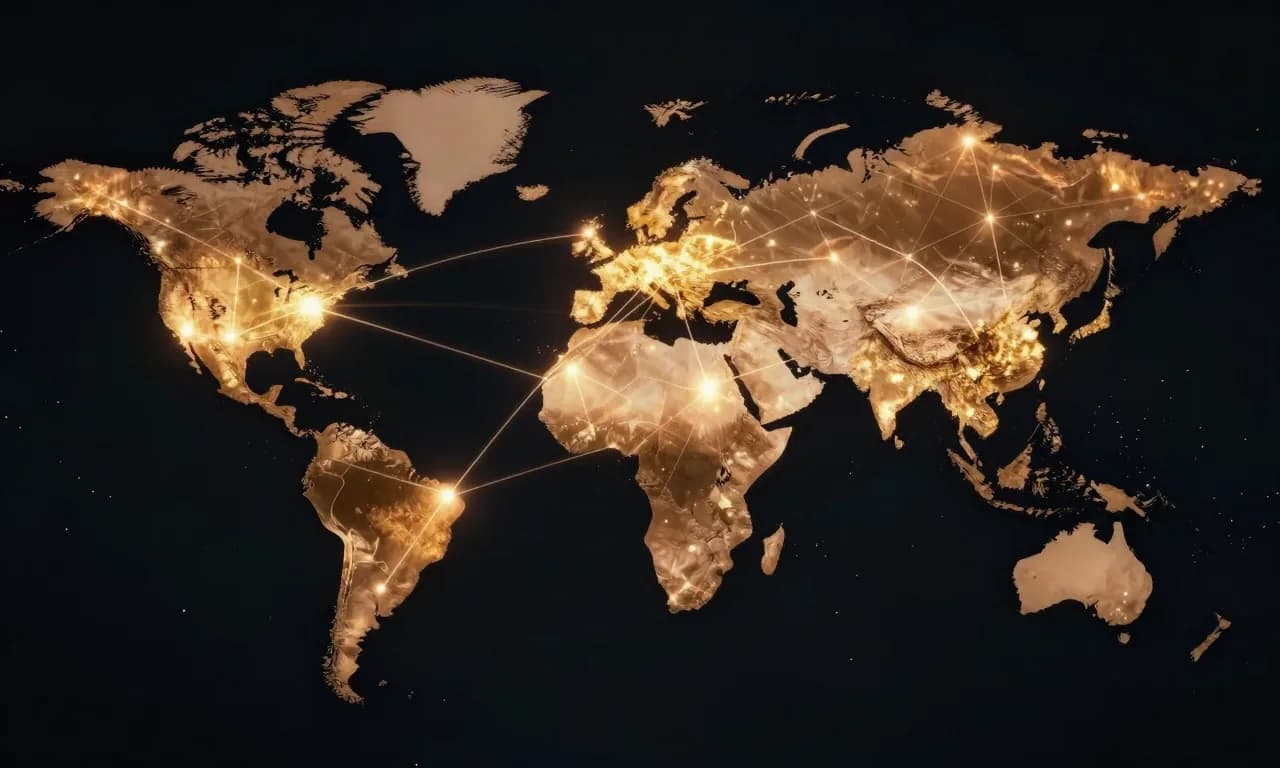
The AI Economic Divide: Developing Countries Left Behind
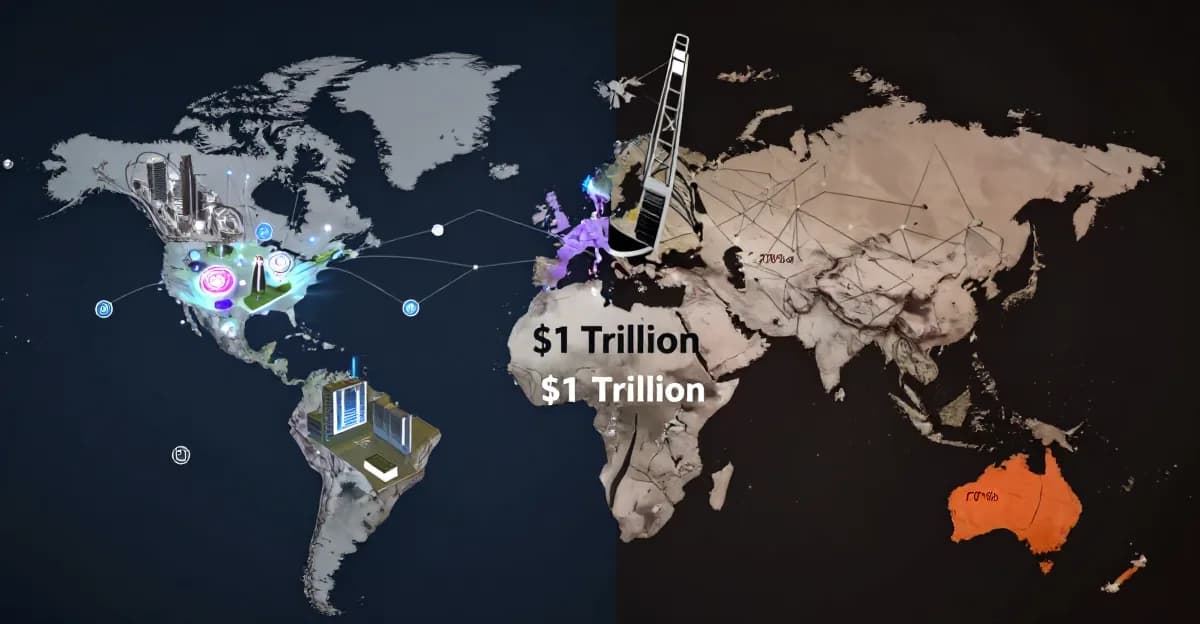
AI could add $1 trillion to ASEAN economies — or widen the rich-poor gap for good. Why 2025-2027 decisions set 50 years of economic outcomes.
Everyone's talking about AI's potential.
"AI will boost GDP by 15%!"
"Productivity gains for everyone!"
"The future is automated!"
But here's what they're not telling you:
AI isn't going to lift all boats. It's going to widen the gap between rich and poor countries to levels we haven't seen in generations.
And the decisions made in 2025-2026 will determine economic outcomes for the next 50 years.
The Optimistic Story (That's Only Half True)
The World Economic Forum and consulting firms love this narrative:
AI will create 97 million new jobs globally (WEF Future of Jobs Report; newer editions may revise this figure)
ASEAN could gain $1 trillion in GDP over 10 years
Productivity could jump 15% in sectors that adopt AI
2 percentage points added to annual GDP growth
Sounds amazing, right?
But there's a massive asterisk: "For countries that are ready."
And most developing countries? They're not ready.
The Reality: Winners and Losers Are Already Clear
🟢 Winners (The AI Superpowers)
United States
- Heavy AI investment (OpenAI, Anthropic, Microsoft)
- Infrastructure already built
- Skilled workforce ready
- Cloud + data center dominance
China
- 70% of global AI patents
- Massive government-backed AI push
- Manufacturing + AI integration
- DeepSeek proving they can compete at frontier
Singapore
- Digital infrastructure ready
- English-speaking skilled workforce
- Government AI strategy since 2017
- Regional hub positioning
South Korea
- Tech-first economy (Samsung, LG, Naver)
- High smartphone/internet penetration
- AI research labs
- Manufacturing automation leaders
🔴 Losers (The "New Era of Divergence")
Asia-Pacific developing economies
- 55% of world population
- Weak digital infrastructure
- Skills gaps (not AI-ready workforce)
- Low computing power
- Energy constraints
Sub-Saharan Africa
- Limited internet access
- Infrastructure decades behind
- AI training = energy-intensive (they can't afford it)
Rural/Indigenous populations everywhere
- Excluded from data collection (AI trained on urban/Western data)
- No smartphone access (40% of South Asian women)
- Jobs automated but no new opportunities created
UNDP warning: "AI risks a new era of divergence, reversing decades of progress in health, education, and income convergence."
Why Developing Countries Can't Keep Up
It's not just about "trying harder." There are structural barriers:
1. Infrastructure Gap
- AI needs massive computing power
- Training models = expensive data centers
- Developing countries lack cloud infrastructure
- Even if they wanted to build AI, they can't afford the hardware
2. Energy Constraint
- AI training is energy-intensive
- Developing countries struggle with power stability
- Can't run 24/7 data centers when the grid fails daily
3. Skills Gap
- AI requires specialized training
- Education systems decades behind
- No AI/ML curriculum in most schools
- Brain drain: Skilled workers leave for US/Europe/Singapore
4. Data Exclusion
- AI trained on Western/urban data
- Rural populations underrepresented
- Indigenous languages ignored
- Result: AI doesn't work well for them even if they adopt it
5. Capital Flight
- Investment flows to AI-ready countries
- Venture capital concentrated in US/China/Singapore
- Developing countries can't compete for funding
The $1 Trillion Illusion
ASEAN could gain $1 trillion in GDP over 10 years from AI.
That stat gets thrown around a lot. But here's the fine print:
Countries like Singapore, Malaysia (urban areas), Thailand (Bangkok) = YES
Countries like Laos, Cambodia, rural Indonesia = NO
Within ASEAN itself, the gap will widen.
It's not "ASEAN gains $1T" — it's "Singapore gains $300B, others fight for scraps."
Who Gets Hit Hardest (The Human Cost)
Women
- 2x more exposed to automation than men
- Jobs in textiles, data entry, customer service = automated first
- South Asian women 40% less likely to own smartphones
- Excluded from digital economy and AI training
Youth
- Entry-level jobs automated (the ladder disappears)
- AI takes graduate roles (coding, analysis, writing)
- Youth unemployment in exposed sectors up 3 points already
Rural Workers
- Jobs in agriculture = low-skill manual labor
- AI automation in manufacturing = no alternative jobs
- Migration to cities (but urban jobs also automated)
The Divergence in Numbers
Let's put the gap in perspective:
| Metric | Developed (US, SG, SK) | Developing (South Asia, Africa) |
|---|---|---|
| AI Patents | 85% | 15% |
| Cloud Infrastructure | Advanced | Limited/None |
| Smartphone Ownership | 90%+ | 40-60% (women lower) |
| AI-Ready Workforce | High | Low |
| Energy Stability | 99.9% | 60-80% |
| Government AI Strategy | Yes | Mostly No |
Why This Matters More Than Past Tech Waves
"But didn't poor countries catch up during the internet era?"
Some did (China, India's IT sector). But AI is different:
Internet (1990s-2010s):
- Low barrier to entry (cheap smartphones)
- Leapfrogging possible (skip landlines, go mobile)
- Human labor still valuable (call centers, outsourcing)
- Result: Convergence (poor countries caught up)
AI (2020s-2040s):
- High barrier to entry (expensive infrastructure)
- No leapfrogging (need compute power + skills)
- Human labor = less valuable (automation)
- Result: Divergence (rich countries pull ahead)
The gap is structural this time.
What Happens If This Continues
Scenario 1: Business As Usual (Pessimistic)
2025-2030:
- Rich countries automate, productivity soars
- Developing countries lose low-skill jobs to automation
- No new jobs created (infrastructure missing)
- Manufacturing jobs don't return (China keeps them via AI + automation)
2030-2040:
- Income inequality between nations at highest levels since colonialism
- Mass migration pressure (people flee jobless countries)
- Political instability in developing regions
- Developed countries fortress up (immigration restrictions)
2040+:
- Two-tier global economy: AI-enabled rich vs jobless poor
- Developing countries stuck in "middle-income trap" forever
- Social unrest, conflict, failed states
Scenario 2: Proactive Policy (Optimistic)
2025-2030:
- Developing countries invest heavily in AI infrastructure NOW
- International partnerships (tech transfer, funding)
- Education systems reformed (AI/ML curriculum)
- Women + youth targeted for upskilling
2030-2040:
- Some developing countries catch up (India's IT sector model)
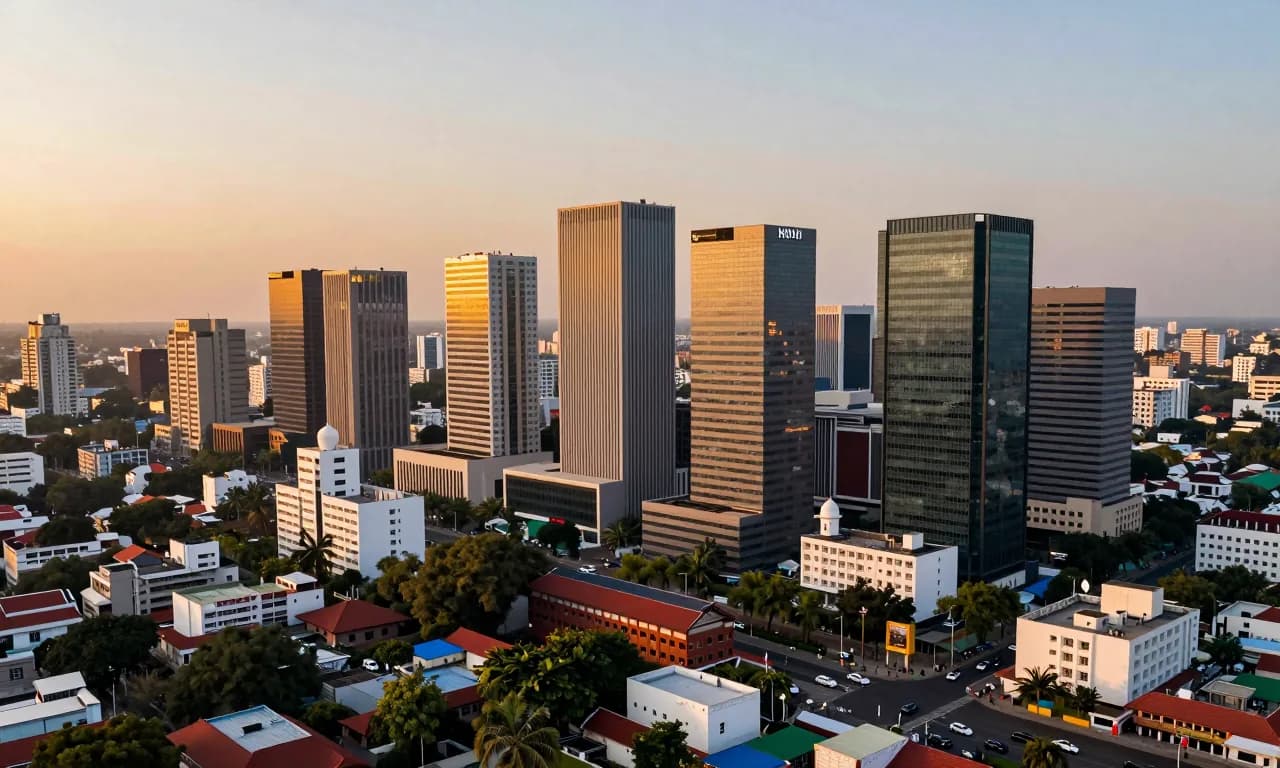
- Regional AI hubs emerge (Nairobi, Jakarta, Manila)
- Global collaboration on AI ethics + access
- Labor-intensive manufacturing shifts to AI-ready developing countries
2040+:
- Narrower gap than Scenario 1
- More balanced global economy
- AI benefits distributed (not just US/China)
What Needs to Happen NOW
The window is 2025-2027. We are now squarely in that window. After that, it's too late.
For Developing Countries:
1. Infrastructure Investment
- Build data centers (partner with cloud providers)
- Stabilize energy grids
- Expand broadband to rural areas
2. Education Reform
- AI/ML curriculum in schools NOW
- Retrain workforce for AI-augmented jobs
- Focus on women + youth
3. Policy Action
- Government AI strategy (not just talk)
- Tax incentives for AI companies
- Attract investment (be the next Singapore)
4. International Partnerships
- Tech transfer agreements
- Joint AI research labs
- Training programs with developed countries
For Developed Countries:
Honestly? They have zero incentive to help.
Economic self-interest = keep the advantage.
BUT: If developing countries collapse economically:
- Migration crises
- Political instability
- Trade disruptions
- Security threats
So there's a pragmatic case for helping.
UN, World Bank, IMF should:
- Fund AI infrastructure in developing countries
- Technology transfer programs
- Global AI ethics + access frameworks
Will they? Probably not enough.
The 2025-2026 Inflection Point
Why these two years matter:
- AI adoption accelerating FAST
- Infrastructure investments take 3-5 years to pay off
- Workforce training takes 2-3 years minimum
- Start now = catch up by 2030
- Wait = fall behind permanently
Countries investing now:
- Singapore: AI hub strategy
- India: National AI policy (but execution weak)
- Vietnam: Manufacturing + AI integration
- UAE: Heavy AI investment
Countries falling behind:
- Most of Sub-Saharan Africa
- South Asia (except India partially)
- Southeast Asia (except Singapore, urban Malaysia)
What This Means for You
If You Live in a Developed Country:
- Your country's lead = your economic security
- Support policies that maintain infrastructure edge
- But prepare for migration/geopolitical tension
If You Live in a Developing Country:
- Push your government to act NOW
- Personally: Upskill in AI (online courses, free resources)
- Consider migration to AI-ready regions if possible
- Don't wait for policy — take individual action
If You're an Investor:
- Bet on AI infrastructure companies (NVIDIA, cloud providers)
- Developing market exposure = risky (divergence coming)
- Watch which countries actually invest vs just talk
Bottom Line
The AI economic divide is real.
- Developed countries will prosper
- Developing countries will fall further behind
- Women, youth, rural workers will suffer most
The gap could be $1 trillion+ by 2035.
The decisions made in 2025-2026 will lock in outcomes for 50 years.
And right now? Most developing countries are sleepwalking into disaster.
The optimists say: "AI will lift everyone!"
The realists say: "AI will lift those who can afford it."
History will prove the realists right.
Unless developing countries act NOW.
Key Takeaways
⚠️ Rich countries get 90% of AI gains, poor countries get 10%
⚠️ China has 70% of AI patents - the lead is massive
⚠️ Women 2x more exposed to automation than men
⚠️ 2025-2027 = the window - we're now in it, and the clock is ticking
⚠️ Structural barriers - not just "try harder," infrastructure is missing
Do you think developing countries can catch up? Or is the gap too wide already? Share your thoughts in the comments below.
Related Reading:
Enjoying this article?
Get posts like this in your inbox. No spam, unsubscribe anytime.